Foundation analysis and repair design
Permanent structural crack bonding
Bowing wall stabilization systems
Written coverage on all repair work
Foundation cracks are not all equal -- their orientation, width, location, and rate of growth determine whether they represent a minor sealing concern or a structural emergency requiring immediate engineering intervention. Vertical cracks in poured concrete walls most commonly result from concrete shrinkage as the wall cures or from differential settlement as the soil beneath the footing compresses unevenly. These cracks are typically stable after they form and respond well to polyurethane or epoxy injection. Diagonal cracks that radiate from corners of window and door openings also frequently reflect normal settlement but should be monitored for width increase over time.
Horizontal foundation cracks are the category that demands the most urgent attention. A horizontal crack in a concrete block or poured wall indicates that the wall is being pushed inward by lateral earth pressure -- the weight of saturated soil and the force of frost heave pressing against the foundation from outside. Unlike vertical shrinkage cracks, horizontal cracks indicate that the wall is actively deflecting and will continue to do so unless the lateral force is counteracted. Walls that deflect more than one inch from plumb are approaching the threshold at which conventional repair methods may no longer be adequate and more extensive structural remediation may be required. Carbon fiber reinforcement applied to a horizontally cracked wall at the right stage of deflection stops further movement and allows the wall to carry its design loads without progressing to failure.
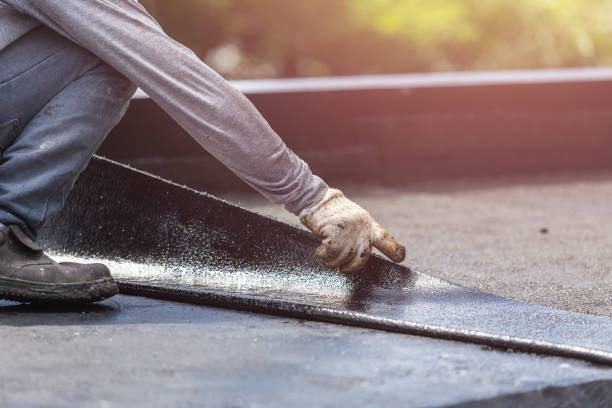
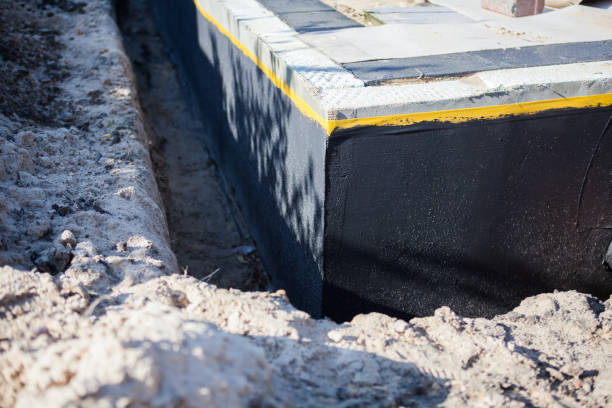
Epoxy injection and polyurethane injection are the two primary methods for sealing and structurally repairing cracks in poured concrete walls. Epoxy injection produces a bond that is actually stronger than the surrounding concrete, making it the correct choice for cracks where structural re-bonding of the two faces is the goal. The process involves drilling a series of small ports along the crack at intervals calculated to ensure complete penetration, installing surface-mounted injection ports, sealing the visible crack face between ports with epoxy paste, and pumping two-component structural epoxy resin under low pressure until it fully fills the void and appears at adjacent ports. The resin cures within the crack to a solid, high-strength bond that is permanent and fully water-resistant.
Bowing walls in block construction represent a specific category of damage where the masonry units have displaced outward of plumb due to lateral soil pressure. Depending on the degree of bowing, repair options range from carbon fiber strap reinforcement that stops further movement to wall anchor systems that attach to stable soil beyond the active failure zone and provide a mechanical load path that reduces the net lateral pressure on the wall. Our structural assessment determines which approach is appropriate based on the measured deflection, the soil conditions, and the construction history of the wall.
Six targeted repair services covering every foundation crack condition in Long Valley, NJ homes.
Every epoxy injection job is documented with before-and-after photos and a report of injection pressures and resin volumes consumed to verify full crack penetration.
Expanding polyurethane resin fills irregular crack voids completely, including geometry that epoxy cannot fully penetrate, and cures to a flexible seal that tolerates minor seasonal wall movement without reopening.
Strap installation requires no excavation of the foundation exterior, minimal removal of interior finishes, and leaves a wall surface that can be painted over after the bonding adhesive cures.
Where bowing wall deflection exceeds the threshold for carbon fiber repair alone, a wall anchor system provides mechanical resistance by connecting the deflecting wall to stable soil beyond the active failure zone through a tension rod and plate assembly.
Severe stair-step cracking that indicates ongoing settlement is evaluated for root cause before repair so we are not sealing a crack that will reopen as the movement continues.
Floor-wall joint sealing is frequently included as part of a comprehensive crack repair scope because the joint is the most common source of water intrusion in otherwise structurally sound poured walls.
Crack mapping, moisture readings, and wall plumb measurements are documented in a written report that accompanies your quote.
Written scope defines every material, method, and warranty term before you approve any work so there are no surprises on the invoice.
Our certified crew executes the repair to specification, maintaining injection pressure logs and documenting material volumes consumed to verify complete crack penetration.
A written warranty is issued on project completion, covering the repair against reoccurrence under normal conditions for the warranty period stated in your contract.
The carbon fiber repair on our bowing wall was completed in one day and was far less invasive than we expected. No excavation, no major interior disruption. The crew was professional and explained every step of the process.
The written quote was detailed and transparent. They explained what type of crack I had, why they were recommending epoxy over polyurethane, and what the warranty covered. That level of professionalism made the decision easy.
Our basement had a floor-wall joint that was allowing water in during every heavy rain. JCB Waterproofing and Construction sealed it properly with hydraulic cement and a polyurethane bead. No water in two rainy seasons since. Clean, professional work.
JCB Waterproofing and Construction serves Long Valley homeowners with certified epoxy injection, polyurethane sealing, and carbon fiber reinforcement. Call for your free structural assessment today.
Call +1-866-476-1348 Now